ISU and E-Da Hospital Unveil Six Breakthrough Patents at the 2025 Taiwan Healthcare+ Expo to Fuel Smart Healthcare Innovation across Southern Taiwan
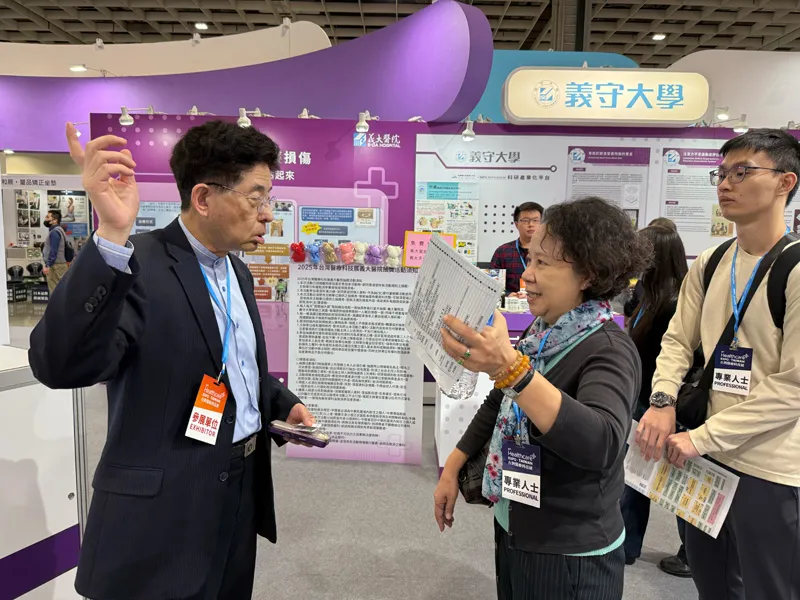
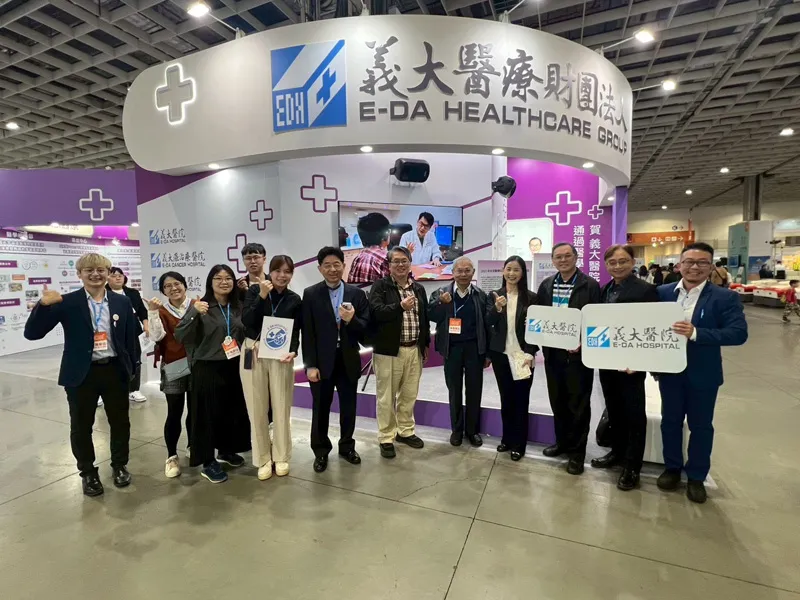
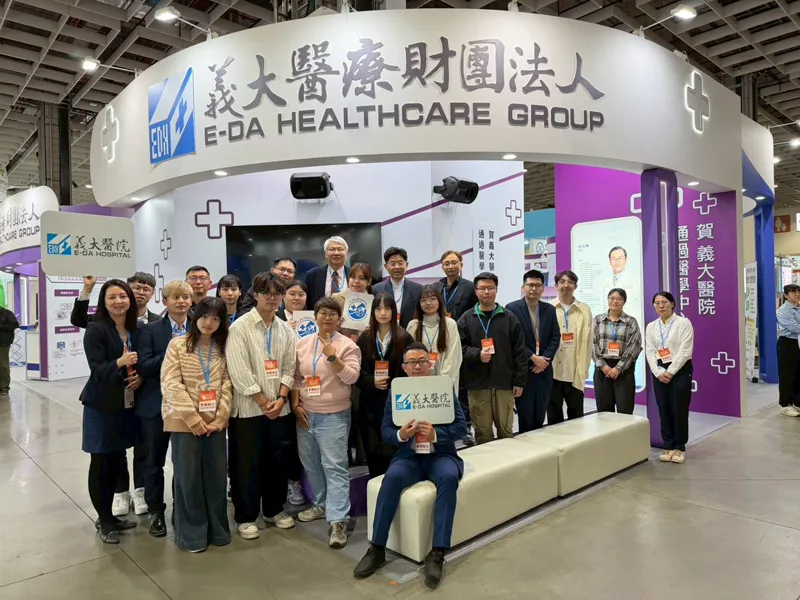
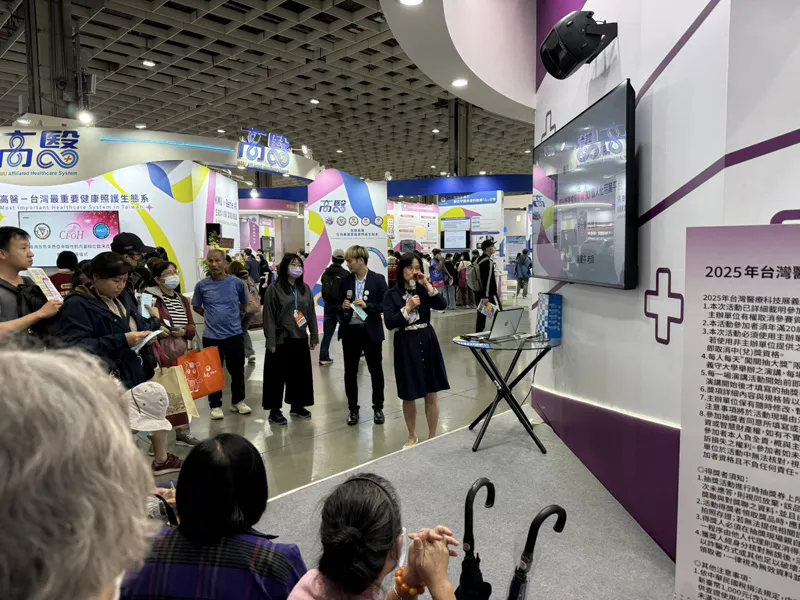
The 2025 Taiwan Healthcare+ Expo, a premier national event for the exchange of medical technology, has officially opened. Centered on the themes of “Precision Testing, Smart Healthcare, and Smart Health,” the College of Medicine at ISU and E-Da Hospital have collaborated to create an integrated interdisciplinary exhibition. This showcase has emerged as a major highlight of Southern Taiwan, garnering significant international attention during the event. The exhibition offers a comprehensive overview of the latest advancements within the E-Da Healthcare System, encompassing physician education, precision clinical medicine, and intelligent hospital management. This display marks a pivotal milestone for medical innovation in Southern Taiwan as it expands onto the international stage. ISU and E-Da Hospital emphasized that deep, long-term synergy among education, research, and clinical practice drives the growing momentum in medical technology in Southern Taiwan. This collaborative effort is fostering a globally recognized medical innovation network, reflecting a comprehensive evolution across healthcare, technology, and talent cultivation.
The exhibition highlights several of ISU’s high-value patented technologies, effectively showcasing the university’s prowess in transforming academic research into innovative solutions that address clinical and caregiving pain points. In the realm of smart rehabilitation and diagnostic technology, ISU presented its latest achievements in AI-assisted clinical decision-making. Addressing the rehabilitation needs of individuals with central nervous system injuries, a team led by Professor Chih-Yu Wang from the Department of Biomedical Engineering at ISU and Professor Chien-Hsiu Liu from the Department of Occupational Therapy at Fu Jen Catholic University developed the “Quantitative Assessment System for Upper Limb Motor Dysfunction.” This patent integrates IMU sensors with AI algorithms to deliver objective, precise Fugl-Meyer Assessment (FMA) results. Concurrently, a team led by Chair Ping-Chia Li of the Department of Occupational Therapy at ISU introduced the “Innovative MR-based Upper Limb Rehabilitation System for Stroke Patients.” This patented technology utilizes MR technology and gamified scenarios to enhance patient motivation and therapeutic outcomes significantly.
Advancing precision diagnostics, Professor Jung-Ching Wu from the Department of Electrical Engineering showcased a patented “ADHD Assessment System.” Focused on non-invasive monitoring, the system provides objective diagnostic evidence and holds substantial potential for telemedicine applications. In the realm of medical education, a team led by Professor Chung-Kun Yen from the Department of Mechanical and Automation Engineering developed a “3D-printed biomimetic biliary tract endoscopic model” that provides high-fidelity training scenarios, significantly enhancing the quality of clinical skill development. Furthermore, the “High-throughput 3D Multicellular Spheroid Platform” patent, developed by Professor Li-Fen Liu from the School of Medicine for International Students in collaboration with E-Da Hospital, establishes a globally competitive preclinical testing platform for drug screening, disease modeling, and pharmaceutical development. These achievements collectively underscore ISU’s formidable R&D strength in smart healthcare, rehabilitation technology, biomedical materials, and medical education as it continues to expand the horizons of medical innovation in Southern Taiwan.
In the fields of precision nutrition and smart health management, the Department of Nutrition at ISU showcased patented achievements that systematize professional knowledge into practical tools, making health management more accessible and integrated into daily life. Among these is the “Lunch Box for Balanced Nutrition,” a patent co-developed by Associate Dean Li-Chin Chen and Professor Li-Wen Fang. This innovative design transforms complex nutritional concepts into intuitive visual cues, using color-coded sections and measurement scales to enable users to accurately control portion sizes and provide critical support for dietary management in patients with chronic diseases. Additionally, Professor Wei-Yi Cheng presented her patented interactive educational tool, “Nutrition I Know,” designed to raise awareness about metabolic syndrome. Through an innovative gamified approach, this tool integrates metabolic syndrome prevention knowledge into nutritional education activities. It is well-suited for broad application in community health education and long-term care settings, facilitating the popularization and practical adoption of health knowledge. These initiatives underscore the pivotal role of nutrition education within the smart health management ecosystem.
ISU’s accomplishments in medical education and research have earned significant international acclaim. According to the authoritative U.S. News & World Report 2024 to 2025 Best Global Universities for Clinical Medicine rankings, ISU is ranked among the top ten in Taiwan alongside prestigious institutions such as National Taiwan University, National Yang Ming Chiao Tung University, and National Cheng Kung University; this distinction validates the global standing of its research and educational quality. Furthermore, in the Global Views Monthly 2025 Enterprise’s Favorite University Students survey, ISU was ranked the top comprehensive university in Southern Taiwan in the medical institution category, reflecting its deep-seated expertise and ongoing innovation in talent cultivation and industry-academic synergy. Guided by the core philosophy of “technology-driven humanity and education connecting the world,” ISU and E-Da Hospital are committed to building an internationally competitive ecosystem for medical education, research, and development. This strategic focus ensures that Southern Taiwan’s medical technology remains a pivotal force in the global health sector as both institutions accelerate toward the milestone of becoming a world-class medical brand.
The exhibition highlights several of ISU’s high-value patented technologies, effectively showcasing the university’s prowess in transforming academic research into innovative solutions that address clinical and caregiving pain points. In the realm of smart rehabilitation and diagnostic technology, ISU presented its latest achievements in AI-assisted clinical decision-making. Addressing the rehabilitation needs of individuals with central nervous system injuries, a team led by Professor Chih-Yu Wang from the Department of Biomedical Engineering at ISU and Professor Chien-Hsiu Liu from the Department of Occupational Therapy at Fu Jen Catholic University developed the “Quantitative Assessment System for Upper Limb Motor Dysfunction.” This patent integrates IMU sensors with AI algorithms to deliver objective, precise Fugl-Meyer Assessment (FMA) results. Concurrently, a team led by Chair Ping-Chia Li of the Department of Occupational Therapy at ISU introduced the “Innovative MR-based Upper Limb Rehabilitation System for Stroke Patients.” This patented technology utilizes MR technology and gamified scenarios to enhance patient motivation and therapeutic outcomes significantly.
Advancing precision diagnostics, Professor Jung-Ching Wu from the Department of Electrical Engineering showcased a patented “ADHD Assessment System.” Focused on non-invasive monitoring, the system provides objective diagnostic evidence and holds substantial potential for telemedicine applications. In the realm of medical education, a team led by Professor Chung-Kun Yen from the Department of Mechanical and Automation Engineering developed a “3D-printed biomimetic biliary tract endoscopic model” that provides high-fidelity training scenarios, significantly enhancing the quality of clinical skill development. Furthermore, the “High-throughput 3D Multicellular Spheroid Platform” patent, developed by Professor Li-Fen Liu from the School of Medicine for International Students in collaboration with E-Da Hospital, establishes a globally competitive preclinical testing platform for drug screening, disease modeling, and pharmaceutical development. These achievements collectively underscore ISU’s formidable R&D strength in smart healthcare, rehabilitation technology, biomedical materials, and medical education as it continues to expand the horizons of medical innovation in Southern Taiwan.
In the fields of precision nutrition and smart health management, the Department of Nutrition at ISU showcased patented achievements that systematize professional knowledge into practical tools, making health management more accessible and integrated into daily life. Among these is the “Lunch Box for Balanced Nutrition,” a patent co-developed by Associate Dean Li-Chin Chen and Professor Li-Wen Fang. This innovative design transforms complex nutritional concepts into intuitive visual cues, using color-coded sections and measurement scales to enable users to accurately control portion sizes and provide critical support for dietary management in patients with chronic diseases. Additionally, Professor Wei-Yi Cheng presented her patented interactive educational tool, “Nutrition I Know,” designed to raise awareness about metabolic syndrome. Through an innovative gamified approach, this tool integrates metabolic syndrome prevention knowledge into nutritional education activities. It is well-suited for broad application in community health education and long-term care settings, facilitating the popularization and practical adoption of health knowledge. These initiatives underscore the pivotal role of nutrition education within the smart health management ecosystem.
ISU’s accomplishments in medical education and research have earned significant international acclaim. According to the authoritative U.S. News & World Report 2024 to 2025 Best Global Universities for Clinical Medicine rankings, ISU is ranked among the top ten in Taiwan alongside prestigious institutions such as National Taiwan University, National Yang Ming Chiao Tung University, and National Cheng Kung University; this distinction validates the global standing of its research and educational quality. Furthermore, in the Global Views Monthly 2025 Enterprise’s Favorite University Students survey, ISU was ranked the top comprehensive university in Southern Taiwan in the medical institution category, reflecting its deep-seated expertise and ongoing innovation in talent cultivation and industry-academic synergy. Guided by the core philosophy of “technology-driven humanity and education connecting the world,” ISU and E-Da Hospital are committed to building an internationally competitive ecosystem for medical education, research, and development. This strategic focus ensures that Southern Taiwan’s medical technology remains a pivotal force in the global health sector as both institutions accelerate toward the milestone of becoming a world-class medical brand.