ISU Expands Culinary Career Paths with Interdisciplinary Education
Dining is far more than a daily necessity; it serves as a vessel for cultural memories, lifestyle refinement, and emotional connection. Driven by changing eras and evolving consumer habits, the food and beverage industry is rapidly shifting toward diversification and customization. Consequently, the career paths for culinary professionals have opened up like never before. Beyond traditional luxury hotels and major corporate dining groups, career opportunities now extend to creative private kitchens, themed catering, brand-driven dining, and stylish culinary spaces, unlocking broader possibilities. In response to these industry trends, the Department of Hospitality Management at ISU is actively adapting. With a core mission to nurture next-generation culinary talents, the Department not only solidifies students’ foundational culinary arts and food service skills but also integrates specialized expertise in culinary design, experience planning, and operational management. This approach empowers students to develop versatile expertise across various dining sectors, seamlessly meeting the
industry’s rapidly changing talent demands.
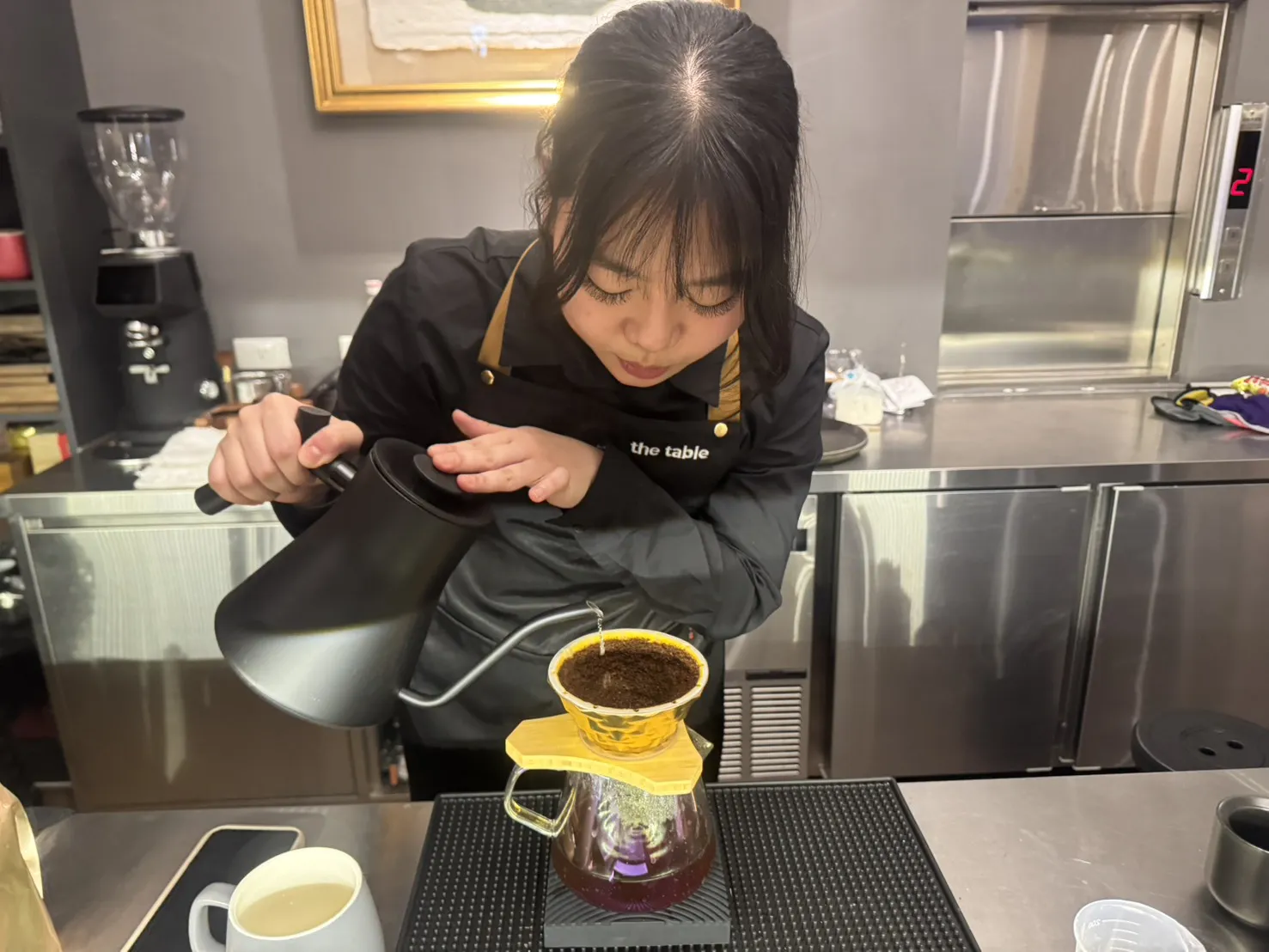
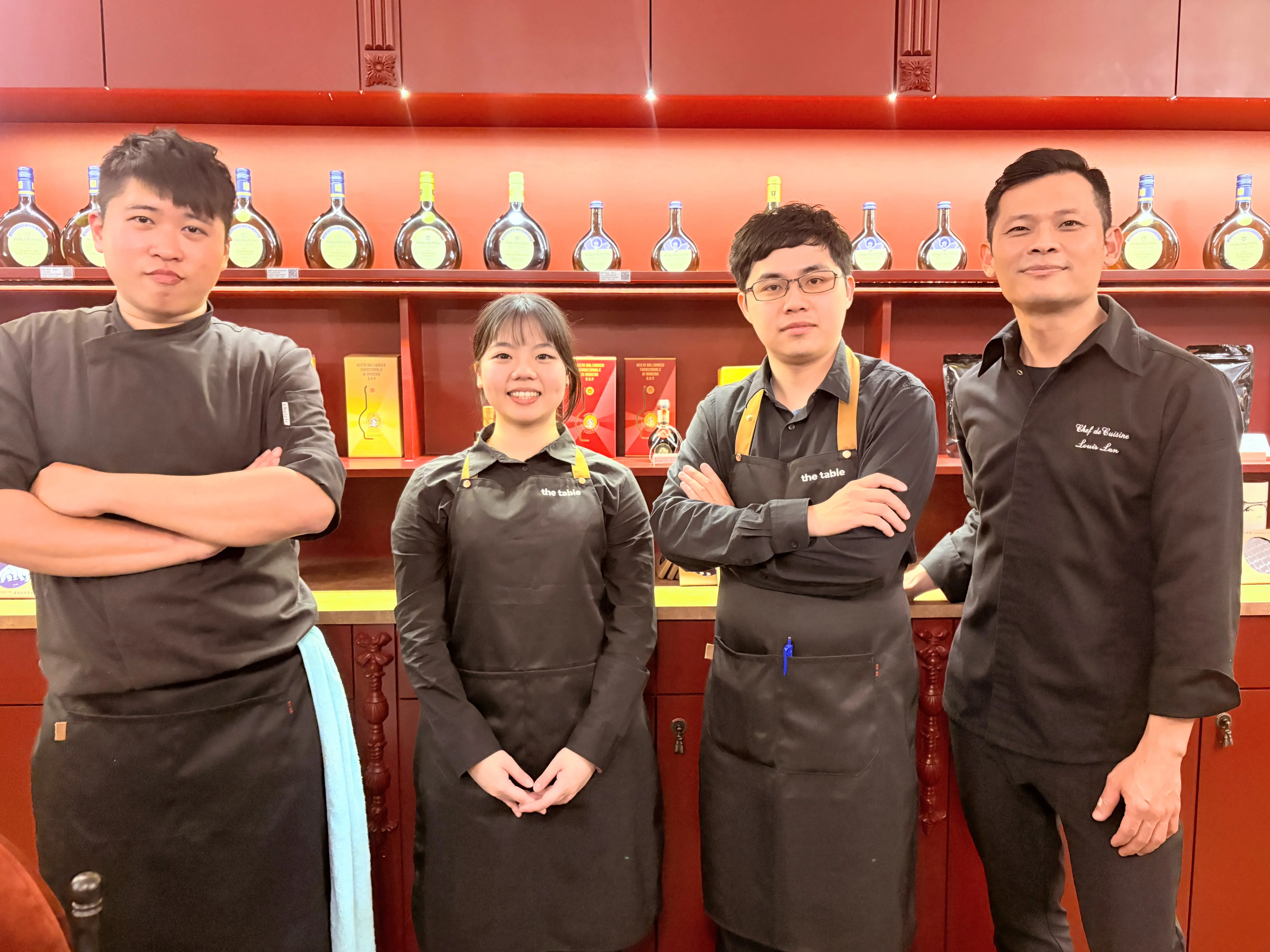
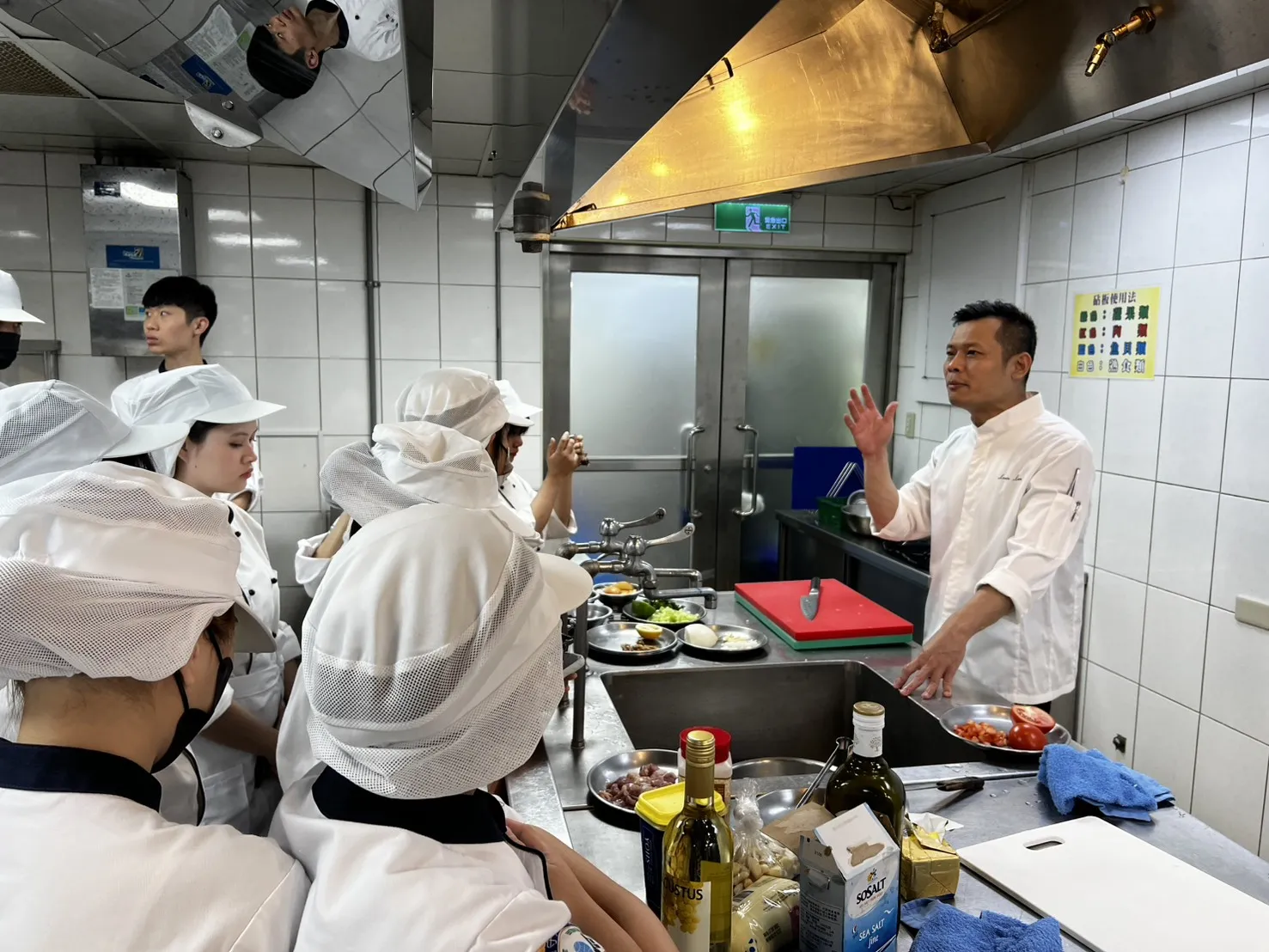
Modern cuisine has long evolved beyond taste alone; it has become an experiential medium woven with culture, stories, and ambiance. To break away from the traditional teaching framework, the Department has introduced a situational teaching model. By extending the learning environment into real-world dining spaces, the kitchen is transformed from a mere cooking area into a stage for exhibiting creativity and storytelling prowess. Led by Zu-Rong Lan, head chef of the renowned domestic bistro “The Table” and an industry expert instructor in the Department, students stepped into an actual service venue for practical, hands-on learning. The curriculum spans culinary design and wine-and-food pairing to customer service, nurturing students’ integrated capabilities across flavor, culture, and context. Throughout the course, students do not just learn to complete a dish. Instead, they practice telling stories through ingredients, establish distinct styles for their meals, and cultivate their perception, expression, and creativity through the subtle art of pairing wine with cuisine. Zu-Rong Lan stated that the modern food and beverage industry increasingly values cross-disciplinary integration capabilities. In addition to technical skills, culinary professionals must possess both creativity and communication skills. Therefore, the curriculum uses the bistro as a “real-world classroom” to nurture next-generation culinary talent who can execute, articulate, and design dining experiences. Hsu-Kuan Liu, Chair of the Department, further pointed out that in response to the continuous diversification of the food and beverage industry, the Department’s curriculum blends contemporary trends with industry demands. Beyond allowing students to operate both front-of-house and back-of-house processes to build a comprehensive concept of dining operations, the Department simultaneously integrates AI and digital management concepts. This approach prepares students to adapt to future smart dining and digital service environments, expanding their career paths into broader horizons, from luxury hotels to creative private kitchens, brand-driven dining, and themed catering.
Since its establishment in the academic year 2007, the Department has consistently aimed to nurture hospitality professionals who possess both practical competence and a global perspective. The curriculum integrates theoretical instruction, technical training, certification counseling, and business ethics, while strengthening English and Japanese language skills to align seamlessly with the demands of the international hospitality market. Notably, as ISU houses its own College of Medicine, the Department’s culinary education uniquely integrates health science resources; relevant nutrition courses are taught by medical faculty, enabling students to understand the scientific correlation between ingredient nutrition and health, thereby elevating the depth and professionalism of culinary design. Furthermore, Taiwan’s culinary prowess is internationally renowned, attracting students from all over the world to study hospitality management in Taiwan. Currently, international students account for over 40% of the Department’s student body. Through multicultural exchange, students gradually build an understanding of and respect for the dining cultures of different nations, spanning culinary styles, table manners, and service details. This transforms hospitality education from mere technical training into a meaningful exchange and dialogue between cultures.
ISU stated that, amid the rapid transformation and diversified development of the hospitality industry, the university will continue to leverage interdisciplinary resource integration and practice-oriented teaching. This commitment aims to forge a comprehensive nurturing environment that equips students with professional competence, health literacy, and a global perspective. By doing so, ISU assists students in discovering their unique culinary language across various stages of dining, empowering them to build a broader future with professionalism and creativity.
Modern cuisine has long evolved beyond taste alone; it has become an experiential medium woven with culture, stories, and ambiance. To break away from the traditional teaching framework, the Department has introduced a situational teaching model. By extending the learning environment into real-world dining spaces, the kitchen is transformed from a mere cooking area into a stage for exhibiting creativity and storytelling prowess. Led by Zu-Rong Lan, head chef of the renowned domestic bistro “The Table” and an industry expert instructor in the Department, students stepped into an actual service venue for practical, hands-on learning. The curriculum spans culinary design and wine-and-food pairing to customer service, nurturing students’ integrated capabilities across flavor, culture, and context. Throughout the course, students do not just learn to complete a dish. Instead, they practice telling stories through ingredients, establish distinct styles for their meals, and cultivate their perception, expression, and creativity through the subtle art of pairing wine with cuisine. Zu-Rong Lan stated that the modern food and beverage industry increasingly values cross-disciplinary integration capabilities. In addition to technical skills, culinary professionals must possess both creativity and communication skills. Therefore, the curriculum uses the bistro as a “real-world classroom” to nurture next-generation culinary talent who can execute, articulate, and design dining experiences. Hsu-Kuan Liu, Chair of the Department, further pointed out that in response to the continuous diversification of the food and beverage industry, the Department’s curriculum blends contemporary trends with industry demands. Beyond allowing students to operate both front-of-house and back-of-house processes to build a comprehensive concept of dining operations, the Department simultaneously integrates AI and digital management concepts. This approach prepares students to adapt to future smart dining and digital service environments, expanding their career paths into broader horizons, from luxury hotels to creative private kitchens, brand-driven dining, and themed catering.
Since its establishment in the academic year 2007, the Department has consistently aimed to nurture hospitality professionals who possess both practical competence and a global perspective. The curriculum integrates theoretical instruction, technical training, certification counseling, and business ethics, while strengthening English and Japanese language skills to align seamlessly with the demands of the international hospitality market. Notably, as ISU houses its own College of Medicine, the Department’s culinary education uniquely integrates health science resources; relevant nutrition courses are taught by medical faculty, enabling students to understand the scientific correlation between ingredient nutrition and health, thereby elevating the depth and professionalism of culinary design. Furthermore, Taiwan’s culinary prowess is internationally renowned, attracting students from all over the world to study hospitality management in Taiwan. Currently, international students account for over 40% of the Department’s student body. Through multicultural exchange, students gradually build an understanding of and respect for the dining cultures of different nations, spanning culinary styles, table manners, and service details. This transforms hospitality education from mere technical training into a meaningful exchange and dialogue between cultures.
ISU stated that, amid the rapid transformation and diversified development of the hospitality industry, the university will continue to leverage interdisciplinary resource integration and practice-oriented teaching. This commitment aims to forge a comprehensive nurturing environment that equips students with professional competence, health literacy, and a global perspective. By doing so, ISU assists students in discovering their unique culinary language across various stages of dining, empowering them to build a broader future with professionalism and creativity.